Detailed description
Most enquiries for this item come down to three decisions made in the wrong order: grade, width, then price. Grade sets the cycle life, width sets the roll cost, and the unit price is only comparable once the first two are fixed.
What the buyer is choosing
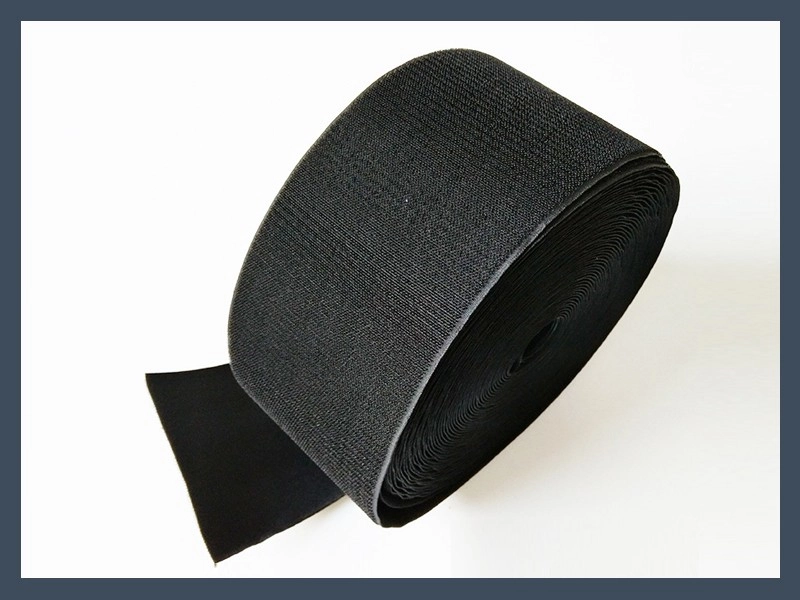
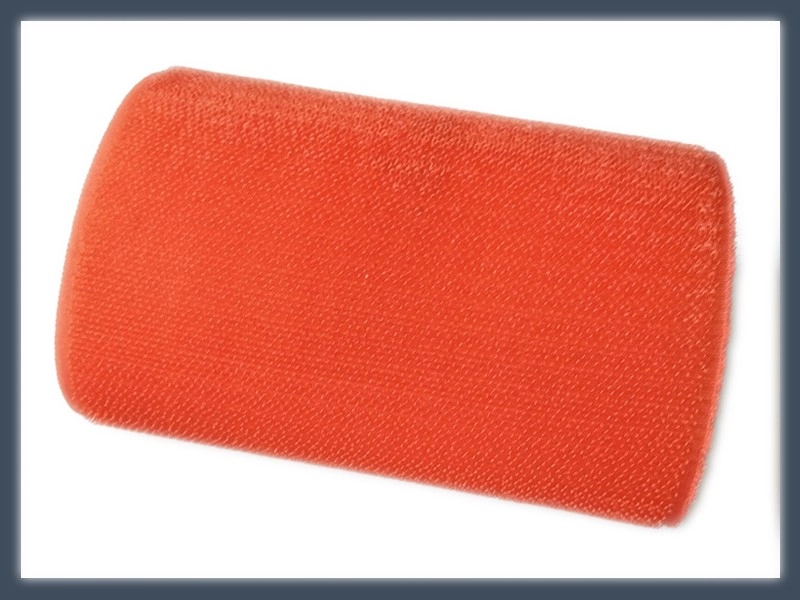
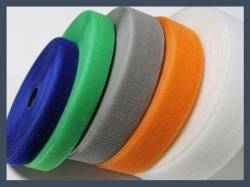
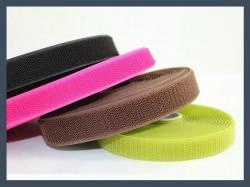
Colour is a specification, not a preference. Dyed lots are matched to a retained standard under D65 light, and a black that matches in an office can read green in daylight. If the colour is customer-facing, approve a physical swatch and keep it, because a photograph is not a standard.
The material question
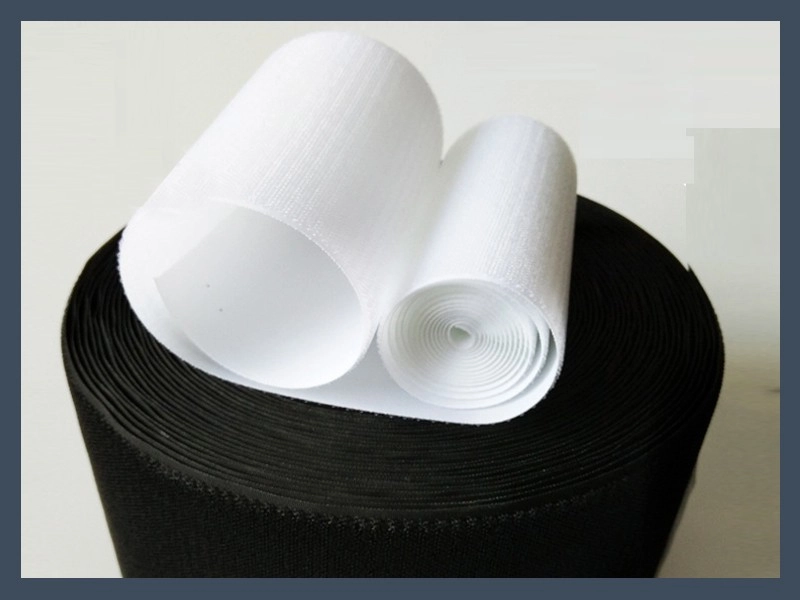
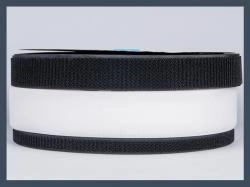
The construction is a woven hook and loop face in the standard grade: enough hook density for a normal closure, priced for volume rather than for a five-year service life. If the application cycles more than a few thousand times, ask for the higher-density weave instead of paying twice for the same part.
How it is quoted
Widths are slit from the master roll in one millimetre steps between 10 mm and 150 mm, held to plus or minus 0.5 mm. A width that is not on the list is a slitting instruction, not a new tool, so it does not add lead time once the master exists.
What ships with the goods
Colour is checked against the retained standard under D65 on every lot, and weft skew, oil marks and hook damage are inspected across the full roll rather than on a cut sample.
Checking it on arrival
Open one carton from the middle of the pallet, not the top. Condensation and compression both show up in the middle of a stack, and the top carton is the one that was packed with the most care.
If the grade is still open, send the application and the cycle count and we will tell you which of the three constructions is the cheapest one that will survive it.