Detailed description
If the last shipment had edges fraying, a width that measured wide on arrival, or a peel that read low in incoming inspection, the cause is almost always in one of the four items described on this page rather than in the price.
What the buyer is choosing
The mistake in comparing quotes is looking at the width and the colour and ignoring the yarn. A 25 mm roll at 380 g/m2 and a 25 mm roll at 300 g/m2 look identical in a photograph and behave completely differently after five hundred cycles.
The material question
The fibre is nylon (polyamide). It takes dye deeply, which is why the colour range is wide and why the colour holds through washing at 40 degrees. Its weakness is moisture regain: a nylon roll absorbs water in transit, measures wide on arrival and settles back over about a week, so allow for it in incoming inspection rather than rejecting the lot.
How it is quoted
Quotations are built from construction, width and colour, in that order. Change any one of the three and the price moves, which is why we ask for all three before quoting instead of sending a range and adjusting afterwards.
What ships with the goods
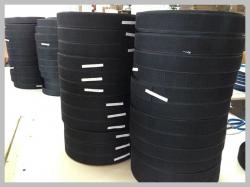
Packing is poly bag plus export carton, palletised for LCL. For humid destinations we add a desiccant and a moisture barrier, because a roll that takes up water in transit will measure wide on arrival.
Checking it on arrival
Weigh a metre of the roll. Weight per metre is the fastest proxy for yarn density, and it is the number that shifts quietly when a supplier tries to hold a price through a yarn increase.
Send the grade, width and colour with the annual volume and the quote comes back against a real construction rather than a catalogue range.