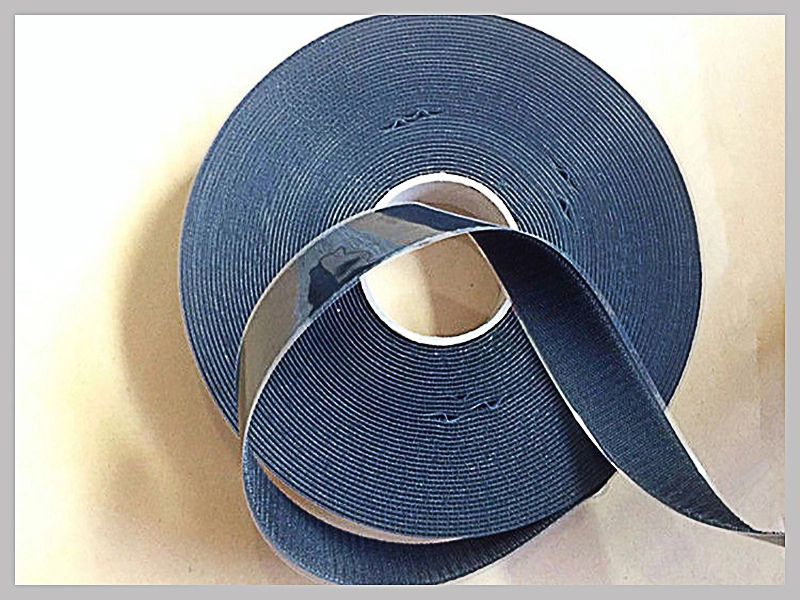
Detailed description
A buyer comparing three quotes for the same nominal product is usually comparing three different constructions. This page sets out what is actually in the tape so the quotes can be read side by side.
What the buyer is choosing
Grade and backing are separate decisions. The same woven face is supplied plain for stitching, coated with acrylic for panels, or coated with rubber for rough and low-energy surfaces. Buying the face and the backing as one item is what produces the 'it stuck for a week then fell off' complaint.
The material question
The construction is a woven hook and loop face in the standard grade: enough hook density for a normal closure, priced for volume rather than for a five-year service life. If the application cycles more than a few thousand times, ask for the higher-density weave instead of paying twice for the same part.
The adhesive version is coated with acrylic rather than hot melt, which is what keeps the bond from creeping when the panel sits in a warm vehicle or behind glass. Full strength takes twenty-four hours at room temperature.
How it is quoted
Minimum order is 500 m in a stock colour and 3,000 m for a custom dye run. The dye minimum is a machine load, not a policy: below it the lot cannot be dyed evenly, and a split lot reads as two colours under D65.
What ships with the goods
Peel and width are measured on the production lot, not on a sample kept from an earlier run. If your incoming inspection uses a different pull speed or dwell time, tell us and we will match it so the two numbers can be compared.
Checking it on arrival
Check the colour in the light the product is sold under. Warehouse fluorescent and daylight will disagree on dark greens and navies, and a lot rejected in one light is often accepted in the other. If it matters, agree the viewing condition before the order, not after.
Send the grade, width and colour with the annual volume and the quote comes back against a real construction rather than a catalogue range.